Air Sealing Performance
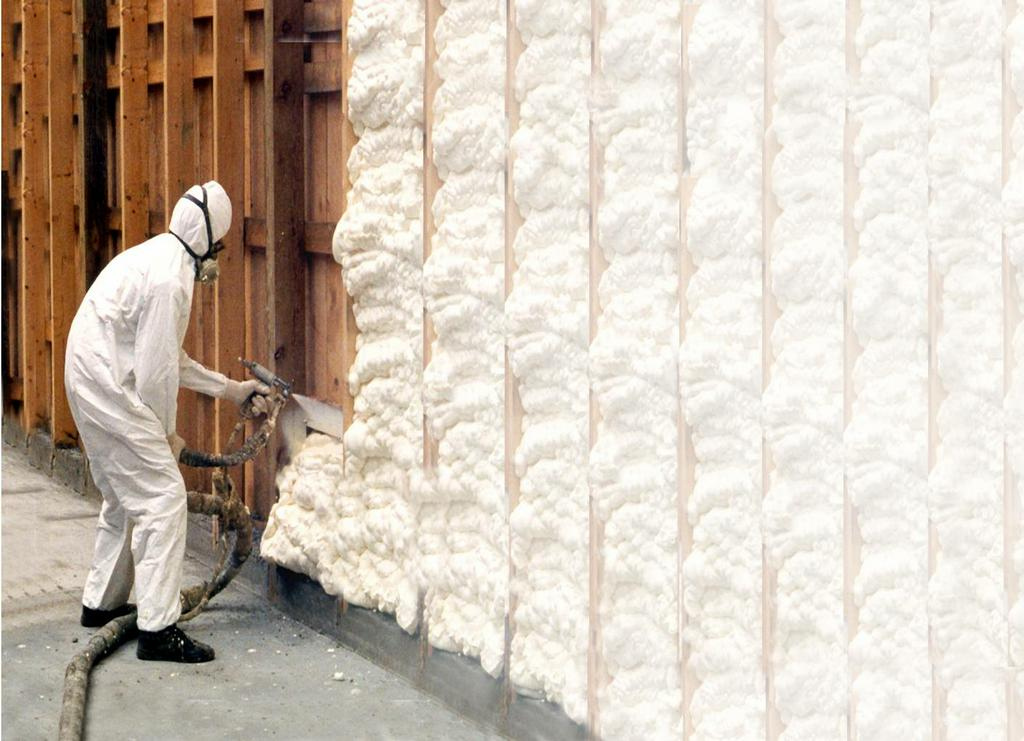
Spray foam helps reduce uncontrolled airflow through problem areas such as penetrations, framing joints, rim joists, and hard-to-seal transitions.
Improve comfort, reduce uncontrolled air leakage, and support better energy performance with spray foam insulation for attics, walls, crawl spaces, basements, garages, and commercial spaces.
Spray foam insulation is designed to expand into gaps, cracks, joints, and irregular cavities, helping create a tighter building envelope. That makes it a strong option when the goal is not only insulation value, but also air control, indoor comfort, and long-term energy performance.
Spray foam helps reduce uncontrolled airflow through problem areas such as penetrations, framing joints, rim joists, and hard-to-seal transitions.
It adds insulation while supporting more stable indoor temperatures in both hot and cold seasons.
Commonly used in attics, walls, basements, crawl spaces, rooflines, garages, and selected commercial assemblies.
Both options can deliver strong air sealing, but they are not identical. The best choice depends on available depth, moisture conditions, performance goals, and the target area of the project.
Open-cell foam expands aggressively, has a softer texture, and is often selected for interior applications where air sealing and sound control are important.
Closed-cell foam is more rigid and compact, making it a strong fit for assemblies where thickness is limited or where added moisture resistance and higher thermal performance are needed.
Spray foam is especially valuable in areas where air leakage, irregular framing, moisture exposure, or limited cavity depth make a high-performance insulation system more useful.

One of the most effective areas for improving comfort, reducing heat loss, and tightening the thermal envelope at the top of the home.

Useful in new framing and selected retrofit situations where strong air control and better thermal consistency are priorities.

Common where moisture exposure, cold floors, and air leakage affect comfort and lower-level performance.

Strong option for areas where air leakage, surface temperature differences, and moisture management all matter.

Helps reduce heat transfer to adjacent rooms and improve comfort in attached structures.

Useful where air control, thermal efficiency, and long-term envelope performance are central to the project.
Need help identifying the best spray foam solution for your property?
Spray foam is often selected for more than just insulation value. It is a strong fit when the goal is to reduce drafts, support energy efficiency, and improve overall building envelope performance.
Helps limit uncontrolled air movement that can create cold spots, hot spots, and comfort issues.
A tighter envelope can help heating and cooling systems operate more effectively over time.
More consistent thermal performance can improve room-to-room comfort throughout the home.
Works well around irregular framing, penetrations, transitions, and difficult-to-insulate spaces.
Both systems can be excellent in the right place. The better choice depends on the project conditions, target area, moisture exposure, and desired performance level.
The best spray foam specification should always match the structure, the target area, local code requirements, and the overall performance goals of the project.
A strong spray foam result starts with matching the right foam type and application strategy to the actual conditions of the structure.
We look at the assembly, leakage points, access, cavity depth, and moisture-related conditions.
We determine whether open-cell or closed-cell is the better fit for the project goals and location.
We prepare the next step for a clean, performance-focused installation with the right coverage strategy.
Answers to common questions about spray foam insulation, foam types, and performance.
Open-cell foam is lighter, softer, and more expansive. Closed-cell foam is denser, more rigid, and usually provides a higher R-value per inch, making it useful where space is limited or moisture-related performance matters.
Common applications include attics, rooflines, walls, crawl spaces, basements, rim joists, garages, and selected commercial envelope assemblies.
Yes. One of the major advantages of spray foam is that it expands into gaps and irregular spaces, helping reduce uncontrolled air movement through the building envelope.
It can be an excellent option in those areas, especially when moisture exposure, air leakage, and lower-level comfort are part of the problem being solved.
That depends on the target area, available depth, moisture conditions, budget, code requirements, and overall performance goals. The right recommendation should match the exact assembly being insulated.
Whether you are planning an attic upgrade, wall insulation project, crawl space work, basement insulation, or a performance-focused retrofit, we can help identify the right spray foam approach for your goals.